


If you've lived in New York long enough, you've probably had this thought.
"Wasn't this thing supposed to come down months ago?"
I hear that question all the time. Sometimes it's from frustrated residents. And quite often, it's from building owners who inherited a project and genuinely don't understand why the temporary protection is still standing.
But actually, it's never meant to stay that long. These structures exist to protect pedestrians while a building is being repaired or while unsafe exterior conditions are being addressed.
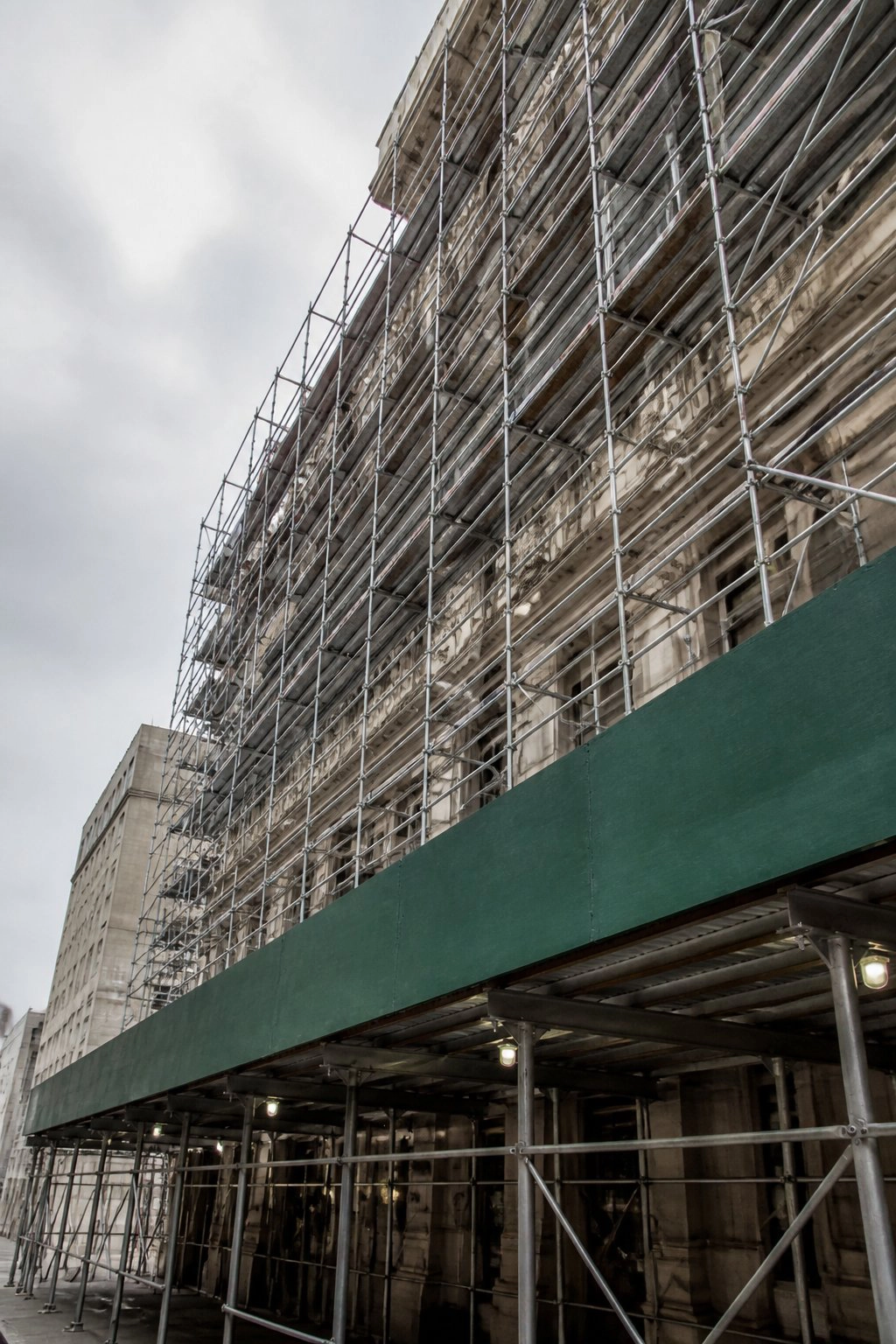
Sidewalk shed in NYC — protecting pedestrians during facade work.
Alarming Stats: As of 2025, the average sidewalk shed in New York City remains in place for more than 500 days. More than 1,000 have stood for over three years, while 334 have remained in place for five years or longer.
I've worked alongside restoration teams, engineers, and property managers through countless facade projects, and I can tell you this:
"The protective structure is rarely the real problem. It's usually the visible symptom of a repair process that hasn't moved forward the way it should."
Let's break down why they're installed, what the city actually requires, and why some seem impossible to remove.
Table of Contents
- 1. Why Does NYC Require Them?
- 2. When Is It Required?
- 3. Why Do They Feel Permanent?
- 4. Facade Compliance
- 5. Rule 01: 2025 Changes
- 6. Rule 02: Missing Deadlines
- 7. Rule 03: Historic Buildings
- 8. Rule 04: Hidden Cost
- 9. Rule 05: Safety First
- 10. How Contractors Remove Them
- 11. What Owners Should Do
- 12. FAQ
Why Does New York Require These Protective Structures?
Imagine you're walking beneath a 12-story apartment building while workers replace deteriorated brick hundreds of feet above you. Would you rather trust gravity or temporary protection?
That's exactly why these systems exist.
Whenever exterior work creates a possibility that tools, masonry, concrete, glass, or construction materials could fall onto a public walkway, the DOB requires pedestrian protection. The same applies when inspectors identify facade conditions that could become dangerous before repairs begin.
Most people associate them with Local Law 11 projects, but that's only one reason they appear. You'll also see them during:
- Exterior restoration
- Building alterations
- Window replacement
- Roof work
- Demolition projects
- Emergency facade stabilization
When Is It Required?
Many people think every construction project automatically needs one. Under NYC Building Code Section 3307, public protection becomes necessary when work creates a potential hazard for pedestrians below.
Some common situations include:
- Buildings over 40 feet undergoing exterior work
- Demolition of structures taller than 25 feet
- Unsafe facade conditions identified by a Qualified Exterior Wall Inspector (QEWI)
- Active repairs where materials or debris could fall onto a public sidewalk
Did you notice something?
The requirement isn't based on how long the project lasts. It's based on risk. A repair that takes only a week may still require full pedestrian protection if workers are operating several stories above a busy sidewalk.
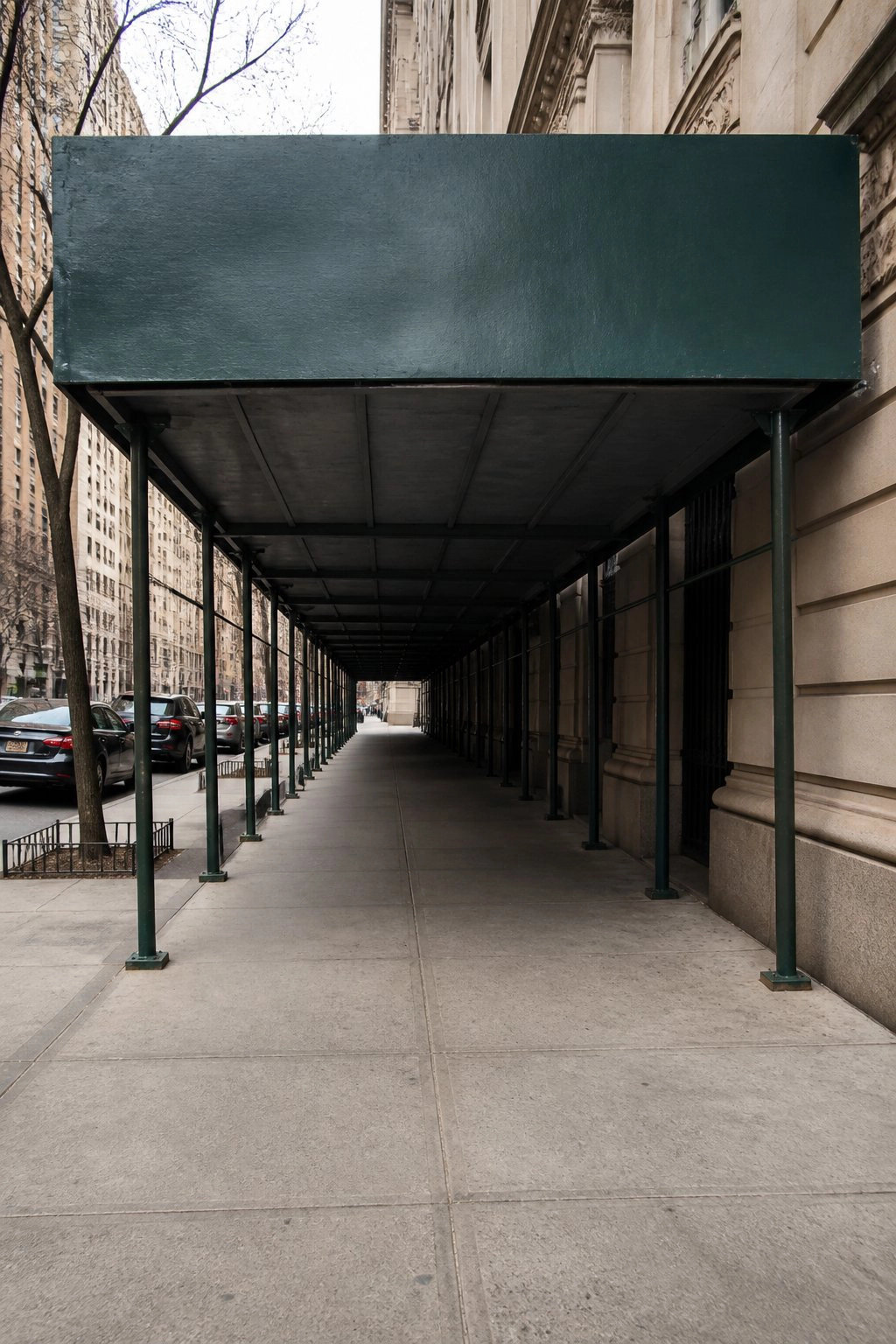
Scaffolding installation for facade inspection and Local Law 11 compliance.
Why Do They Feel Permanent?
This is where most people misunderstand the process. They assume the structure stays because nobody bothered removing it.
That's rarely what happens.
In almost every long-term project I've seen, something else is holding everything up. Maybe the engineer is waiting for repairs to finish. Maybe permits haven't been approved. Maybe additional deterioration was discovered after work began. Or maybe the building board hasn't approved the budget yet.
The protection remains because the underlying safety concern hasn't officially disappeared. Until the engineer verifies the work and the city receives the required documentation, it usually can't come down.
The Biggest Reason They Stay Up: Facade Compliance
Many of New York's longest-standing installations aren't tied to new construction. They're connected to Local Law 11, officially known today as the Facade Inspection & Safety Program (FISP).
Every building taller than six stories must undergo recurring exterior wall inspections performed by a Qualified Exterior Wall Inspector. Across the city, roughly 16,000 buildings participate in this program every inspection cycle.
During these inspections, facade conditions are classified as:
- Safe
- Safe With Repair and Maintenance Program (SWARMP)
- Unsafe
If an inspector identifies an unsafe condition, public protection usually becomes mandatory until repairs are completed. So these structures serve as active safety measures while owners work through complex facade restoration.
The 2025 Changes That Put Owners on the Clock
For years, one of the biggest criticisms was that temporary protection could remain in place almost indefinitely with very little pressure to move projects forward. But that changed in 2025.
As part of Mayor Eric Adams' Get Sheds Down initiative, the City Council approved several new laws aimed at reducing long-standing installations across New York. One of the biggest changes shortened the standard permit duration from one year to just 90 days.
Instead of renewing annually, owners now face much more frequent reviews. Every renewal requires documentation showing:
- What repair work has been completed
- Why any delays occurred
- Whether active progress is continuing
Simply renewing permits without meaningful progress is becoming much more difficult.
By the Numbers
- Standard permit validity reduced from 365 days to 90 days
- Progress documentation required for renewals
- Thousands of aging installations are targeted under the city's reform program.
Missing Deadlines Is Getting Expensive
The city didn't just shorten permit periods. It also attached real financial consequences to inactivity. Once a project enters the compliance process, owners are expected to keep it moving.
| Requirement / Delay | Penalty |
|---|---|
| No active work after the 2nd permit renewal (structure in place for less than 3 years) | $10 per linear foot per month |
| No active work after the 2nd permit renewal (structure in place 3 to under 4 years) | $100 per linear foot per month |
| No active work after the 2nd permit renewal (structure in place 4+ years) | $200 per linear foot per month (maximum $6,000/month) |
| Construction documents for the unsafe facade were not filed within 5 months | $5,000–$20,000 |
| Complete repair permit application not filed or diligently pursued within 8 months | $5,000–$20,000 |
| Unsafe facade repairs not completed within 2 years (without DOB-approved extension) | $5,000–$20,000 |
Historic Buildings Add Another Layer
Older neighborhoods introduce an entirely different challenge. Brooklyn alone contains more than 40 historic districts, while New York City's landmarked properties are heavily concentrated in Brooklyn and Manhattan.
If a building falls within one of these protected areas, visible exterior work often requires review by the Landmarks Preservation Commission (LPC) before construction begins.
Imagine replacing deteriorated brick on an ordinary apartment building.
Now imagine replacing that same brick on a protected brownstone where the mortar color, texture, and restoration method must match historic standards.
The repair itself may take weeks. Getting approval can take considerably longer. That's one reason restoration schedules vary so dramatically between neighborhoods.
The Hidden Cost of Waiting
Most people assume owners save money by delaying repairs. I've rarely seen that happen. The opposite is usually true.
According to industry estimates, installing pedestrian protection often costs $125 - $200 per linear foot during the initial installation. After that, maintenance, inspections, renewals, insurance, and ongoing compliance continue to add costs.
For many buildings, keeping the structure in place for well over a year ends up costing tens of thousands of dollars. This money could have gone toward completing the repairs instead.
A 2024 study commissioned by the New York City Mayor's Office found that businesses located beneath long-standing sidewalk sheds lose between $3,900 and $9,500 in consumer spending every month. Restaurants and bars experienced the largest declines.
Safety Still Comes First
I understand this frustration. Nobody enjoys walking under a dark canopy every day. Property owners don't enjoy paying for them either.
But it's important to remember why they exist. They're there because facade failures can be deadly.
One of the most widely cited examples is the tragic death of Erica Tishman in Manhattan in 2019 after falling facade debris struck her on a public sidewalk. Incidents like that changed how the city approaches exterior wall safety.
Today, enforcement is more aggressive, inspections are more detailed, and owners face greater pressure to address problems before accidents occur. The inconvenience may be frustrating. But the alternative is far worse.
How Experienced Contractors Get Them Removed Faster
After working around facade restoration projects for years, I've noticed something interesting. The buildings that remove pedestrian protection the fastest usually are the ones with the best planning.
A proactive team doesn't wait for problems to appear. They build a roadmap from day one. A typical successful process at Local Law 11 Masonry Contractors NYC looks like this:
1. Review the Engineer's Findings
Everything starts with the inspection report. The clearer the scope, the fewer surprises later. The team identifies:
- Unsafe conditions
- SWARMP items
- Repair priorities
- Access requirements
- Documentation needs
2. Secure Permits Early
Permit delays are one of the most common causes of project slowdowns. Experienced contractors submit applications early and track approvals closely rather than waiting until mobilization.
3. Plan Access Efficiently
In New York, access is often more complicated than the repair itself. The better the logistics plan, the fewer interruptions during construction. Questions need answers:
- Is the sidewalk wide enough?
- Is there rear-yard access?
- Are neighboring properties affected?
- Will suspended scaffolds be needed?
- Are there retail tenants below?
4. Keep Documentation Current
This is where many projects fall behind. Repair work alone doesn't close a compliance cycle.
Photographs, inspection reports, progress records, engineer verification, and DOB submissions all need to move together. I've seen projects sit for months simply because paperwork wasn't completed.
5. Coordinate Final Sign-Off Quickly
Once repairs finish, the goal becomes getting the engineer back on-site, documenting completed work, updating filings, and closing permits as quickly as possible.
That's what ultimately allows removal. Not the repair itself. The verified completion of the repair.
What Should Property Owners Do Right Now?
If your building currently has pedestrian protection in place or may need one soon, here's my advice:
Don't focus on the structure itself. Focus on the reason it's there.
Ask:
- Has the repair scope been finalized?
- Are permits moving forward?
- Is the engineer involved throughout the process?
- Are deadlines being tracked?
- Is documentation current?
- Is work actively progressing?
The fastest way to remove temporary protection is almost always to accelerate the repair process behind it.
Frequently Asked Questions
It is generally required when exterior construction, demolition, or unsafe facade conditions create a potential falling-debris hazard for pedestrians.
Yes. They are temporary pedestrian protection systems intended to remain only until the underlying hazard is addressed.
There is no universal limit. It remains in place until repairs are completed, inspections are finalized, and required approvals allow removal.
Common causes include delayed facade repairs, funding issues, permit challenges, engineering reviews, and landmark approval requirements.
Not always. It becomes necessary when inspection findings or repair activities create conditions that require public protection.
Yes. Installation, maintenance, renewal, and removal are all governed by Department of Buildings requirements.
The city reduced standard permit durations, increased documentation requirements, and introduced stronger penalties aimed at reducing long-standing installations.
Generally no. The condition that required public protection must be corrected first and verified through the appropriate compliance process.
The building owner is ultimately responsible, though contractors typically handle installation and maintenance during active projects.
By moving repairs forward quickly, coordinating closely with engineers, keeping documentation current, and avoiding permit or compliance delays.
The Bottom Line
These structures were never intended to become permanent parts of New York's streetscape. They're temporary safety measures designed to protect the public while buildings address exterior risks.
For years, many remained in place far longer than anyone wanted due to delayed repairs, funding challenges, permit issues, and administrative bottlenecks. That's exactly why the city introduced major reforms in 2025.
From what I've seen, the buildings that succeed are the ones staying organized. They involve engineers and track deadlines properly.
If you want someone to manage all of that for your building, then give us a call now. We serve across all five NYC boroughs.