


I get the same phone call at least twice a month. Someone notices a thin line running across an exterior wall, panics a little, and asks if their house is falling apart.
Most of the time, I can reassure them within minutes. Every once in a while, though, that small line turns out to be the first visible warning of a much bigger issue.
The key isn't simply noticing the damage. It's understanding what caused it. Some surface lines are a perfectly normal part of how cement-based finishes cure and age. Others point to moisture intrusion, structural movement, or hidden deterioration that shouldn't be ignored.
This guide will help you tell the difference so you know when a simple repair is enough and when it's time to call a professional.
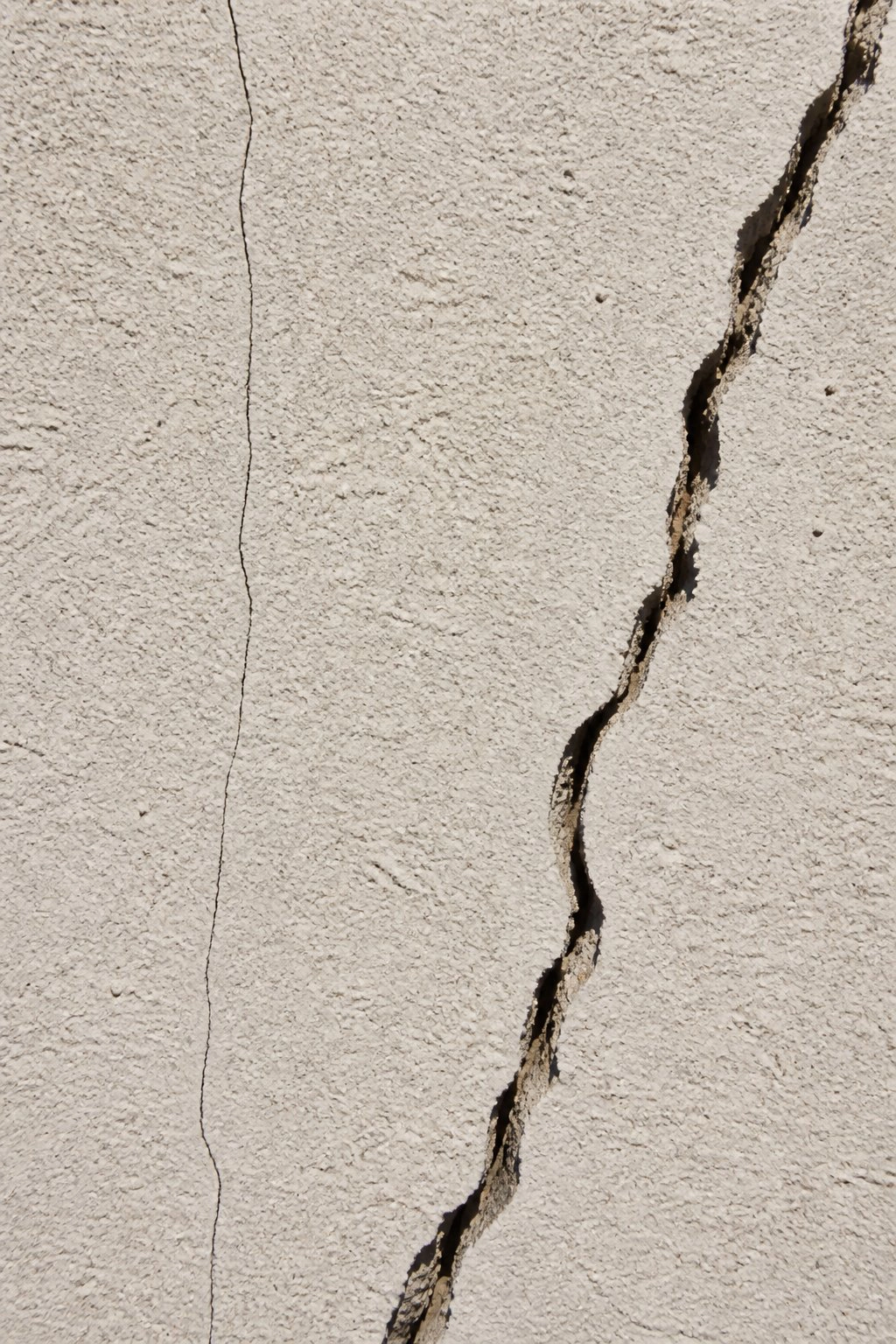
Stucco cracks on an NYC building facade — knowing the difference between cosmetic and structural damage is key.
Table of Contents
Why Does Stucco Crack?
A lot of homeowners are surprised to learn that even a properly installed exterior finish can develop fine lines during its first year. That's not necessarily poor workmanship. It's a natural result of the curing process.
As Portland cement hardens, it shrinks slightly. According to the Stucco Manufacturers Association, minor shrinkage lines are expected and often appear shortly after the base coat cures. Normal building movement and small framing shifts also place stress on the exterior surface over time.
This finish is designed to protect the structure. One of the first things professionals evaluate is the width of the opening. Hairline damage measuring less than 1/16 inch is generally considered cosmetic unless it's accompanied by moisture, movement, or other warning signs.
Cosmetic Damage: When You Probably Don't Need to Worry
Not every visible line signals a serious problem. In many cases, it's simply the exterior finish responding to normal curing or seasonal expansion and contraction.
It's usually considered cosmetic if it has most of these characteristics:
- Less than 1/16 inch wide.
- Limited to the finish coat only.
- Appears as a random hairline, spiderweb, or checking patterns.
- Shows no water stains, discoloration, or dampness nearby.
- Doesn't feel soft, hollow, or loose when lightly tapped.
- Appeared within the first year after installation or recoating.
These minor imperfections rarely affect the building's structural integrity. If appearance is the only concern, they're typically repaired with an exterior-grade elastomeric patch, texture matching, and repainting where necessary.
The important thing is to monitor them. If the damaged area begins to widen, reappears after repair, or develops signs of moisture, it's no longer just a cosmetic issue and should be evaluated more closely.

Professional stucco repair in NYC — proper evaluation and repair prevents small issues from becoming major problems.
Warning Signs: When Professional Repairs Are Needed
Most surface lines aren't an emergency. But some patterns deserve immediate attention because they may indicate movement, moisture intrusion, or hidden damage behind the exterior finish.
Watch for these warning signs:
Research published through ASTM also highlights that moisture entering through damaged exterior plaster can contribute to deterioration of wall assemblies, making early investigation far less expensive than repairing concealed rot or corrosion later.
7 Signs It's Time to Call a Professional
Don't delay an inspection if you notice:
- Openings wider than 1/8 inch.
- Water stains, mold, or musty odors nearby.
- Hollow or loose areas around the damaged section.
- Doors or windows that suddenly stick.
- The same area reopened after previous repairs.
- Diagonal or stair-step patterns around openings.
- Bulging, bowing, or sections pulling away from the wall.
These symptoms often point to issues extending beyond the finish coat. In many cases, the visible damage is only the first indication of movement. Early evaluation helps prevent more extensive and expensive restoration work later.
Can It Be Repaired?
In most cases, yes. The real question isn't whether it can be repaired; it's what caused the damage in the first place.
For minor cosmetic imperfections, the process is relatively straightforward. After cleaning the area, the surface is filled with an exterior-grade elastomeric or acrylic patch, the texture is matched, and the finish is repainted if necessary.
The approach changes when moisture or structural movement is involved.
If water has penetrated behind the exterior finish, contractors often need to remove the affected section to inspect the metal lath, weather-resistive barrier (WRB), flashing, sheathing, and framing.
Any deteriorated materials should be repaired or replaced before the wall is closed back up. Simply filling the visible opening without correcting the source almost guarantees the problem will return.
Professional repairs generally follow recognized industry standards such as ASTM C926 (Application of Portland Cement-Based Plaster) and ASTM C1063 (Installation of Lathing and Furring for Portland Cement Plaster). It helps ensure the restored wall performs as intended rather than simply looking repaired.
Can You Repair It Yourself?
I'm not going to tell you every little surface line needs a contractor. Because it doesn't.
If the damage is minor, stable, and clearly cosmetic, this is a reasonable DIY project for homeowners comfortable with basic exterior maintenance. A quality repair can improve both appearance and weather resistance without much difficulty.
Here's the right way to handle small cosmetic damage:
- Open the line slightly with a utility knife or crack chaser to create a shallow V-groove.
- Remove dust and loose material, then let the area dry completely.
- Apply an exterior-grade elastomeric or acrylic patching compound designed for cement-based finishes.
- Smooth and feather the repair so it blends into the surrounding texture.
- Match the existing finish using a sponge, brush, or trowel.
- Once cured, repaint or apply a breathable exterior coating if needed.
Where people get into trouble is assuming every repair is this simple.
If you uncover damp sheathing, rusted metal lath, loose material, or the opening continues to grow after patching, stop right there. At that point, you're dealing with the symptom of something happening behind the wall.
That's when it's worth bringing in someone who can determine what's actually causing the problem before you spend time repairing the same area twice.
Quick Story From One of Our Projects
A homeowner once called us at Local Law 11 Masonry Contractors NYC about what looked like a single diagonal line running from the corner of a second-story window. It was only about 1/8 inch wide, with a faint brown stain beneath it.
Once we opened the area, we found moisture-damaged sheathing caused by failed window flashing that had been leaking for months. The exterior finish was the first place where damage became visible.
We replaced the flashing, repaired the affected materials behind the wall, and restored the finish. Had the homeowner simply filled the opening with caulk, the leak would have continued unnoticed, leading to far more extensive repairs later.
"Don't judge the seriousness of the problem by the size of the line. Sometimes the smallest visible defect is the first warning that something behind the wall needs attention."
Frequently Asked Questions
Yes. Fine hairline cracks are a normal part of the curing process and minor building movement. If they're narrow, stable, and show no signs of moisture, they're usually cosmetic.
It's worth getting a professional inspection if the damage is wider than 1/8 inch, keeps growing, reappears after repairs, shows water stains, or follows diagonal or stair-step patterns.
Yes. Even small openings can allow moisture to enter over time, potentially leading to mold, wood rot, corrosion, and other hidden damage if left untreated.
If it's purely cosmetic, yes. Small surface imperfections can often be repaired with an exterior-grade elastomeric patch and a matching finish. Larger or recurring problems should be professionally evaluated first.
Costs vary depending on the size of the damaged area, accessibility, and whether the issue is cosmetic or involves moisture or structural repairs. A simple patch costs far less than rebuilding a water-damaged wall.
No. Most are caused by normal curing or seasonal movement. However, wide, recurring, or stair-step patterns can indicate structural movement and shouldn't be ignored.
No. Paint only hides the appearance. Unless the underlying issue is repaired, the same area will usually reopen over time.
Inspect your exterior annually, repair minor defects early, maintain gutters and drainage, and address water intrusion promptly. Small maintenance jobs are almost always less expensive than major restoration later.
The Bottom Line
Most of what you notice on an exterior wall is nothing more than the result of normal curing and everyday building movement. The goal is to recognize the few warning signs that actually matter.
If the damage is growing, letting in water, returning after repairs, or following structural patterns, don't just cover it up. Find out what's causing it.
Catching the problem early is almost always simpler, less expensive, and far less disruptive than waiting until hidden damage turns into a major restoration project.